Tuesday, June 28, 2011

The World’s Largest Machine and PLM!

When you think about large machines what does come into your mind?

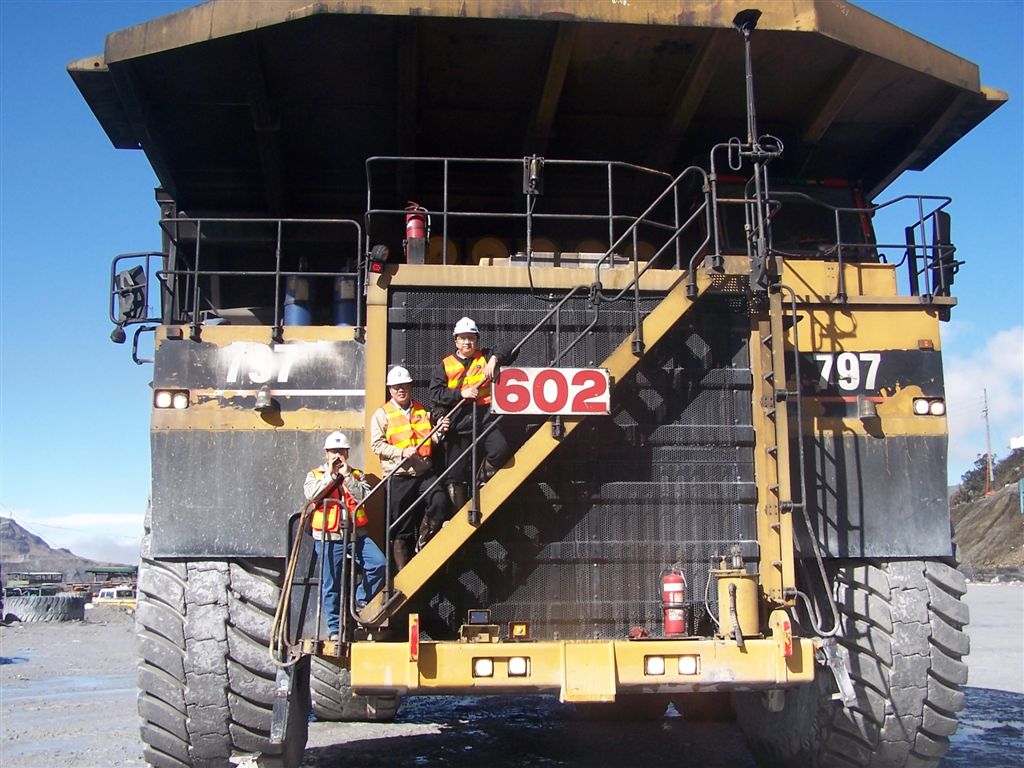
The Caterpillar 797?


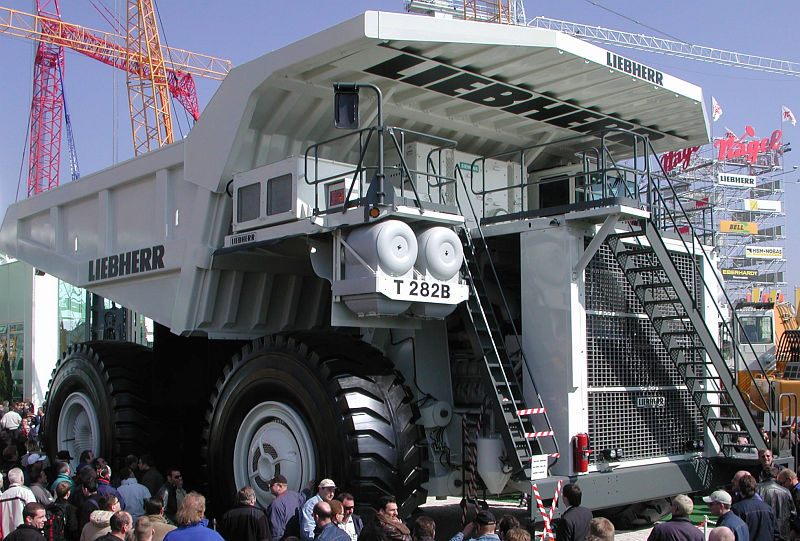
Or the Liebherr T 282B?


Or the Krupp's Bagger 288?


Or the NASA's Mobile Launcher Platform?


Well as per the Guinness Book of World Records, CERN’s Large Hadron Collider is the largest and most complex machine ever built.

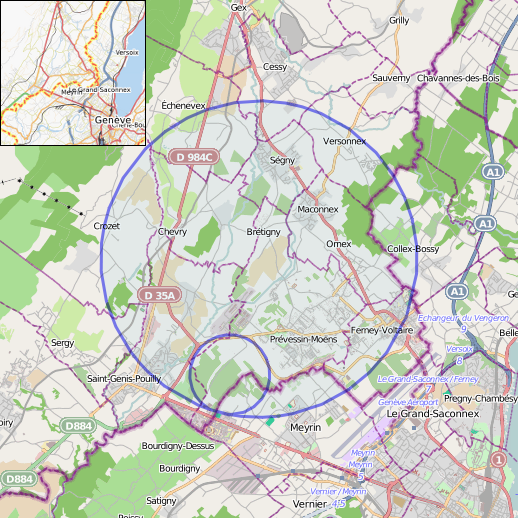
The Large Hadron Collider (LHC) lies in a tunnel 27 kilometers (17 mi) in circumference, as deep as 175 meters (574 ft) beneath the Franco-Swiss border near Geneva, Switzerland. This synchrotron is designed to collide opposing particle beams of either protons at an energy of 7 teraelectronvolts (7 TeV or 1.12 microjoules) per particle, or lead nuclei at an energy of 574 TeV (92.0 µJ) per nucleus. http://en.wikipedia.org/wiki/Large_Hadron_Collider


More information, facts and figures on the LHC can be found in CERN FAQ – LHC the guide http://cdsweb.cern.ch/record/1165534/files/CERN-Brochure-2009-003-Eng.pdf

PLM Challenges: The primary challenge is the complexity of the whole operation – The accelerator complex consisting of close to 100 million assets. The other challenge is quality as tolerances are measured in µm in an installation of several kilometers. Maintenance and operations are other significant challenges.

The PLM puzzle in CERN is solved by a mix and match of several commercial PLM systems. The Equipment Data Management Service (EDMS) provide the organization with the engineering and equipment data management capabilities.


While probably it has not been easy, but this proves that (commercial) PLM systems can be used in a scientific environment too. 

Monday, April 4, 2011

QR Code and PLM

Yoann some time back wrote an exciting article on Integrating QR-code tag in User form in Aras Innovator (http://bit.ly/dGW2gx). This is a very interesting union! I am surprised to see that not many PLM vendors have QR code generation facilities. For starters QR Code has the capacity to encode 7,089 numeric characters, 4,296 Alphanumeric characters or 2,953 bytes of binary data (http://en.wikipedia.org/wiki/QR_code). 

QR Code was created by Toyota subsidiary Denso-Wave in 1994. As noted in the Denso-Wave’s case studies, QR code is being used in a variety of industries including Order/Product Scanning System for Automotive Parts, Process Control System for Electronic Circuit Boards, Logistics Control System for Food Products, Shipping Control System for Garment Products, etc. These codes contain varied data including product code, expiration date, manufacturing history, shipping destination, color, size, customer data, shipper data, production line, serial number etc.


The potential for QR Codes is limitless.  What’s most exciting is how they take what social media is doing well now, bringing people together with technology, and extending it to enhance the experience (http://bit.ly/i3hs2S). Some suggested uses for QR codes in the AEC (Architectural, Engineering and Construction) industry include using these codes to Link to Technical Information, Testimonials or case Studies and Customer Service (http://bit.ly/eKWU5e) Howcast in a recent blind pitch to Ikea, the company illustrated how video and QR codes could be used to create clear, overlaying instructions to guide consumers through the furniture assembly process. Such technology could be leveraged not only to improve consumer satisfaction, but could very well cut down on customer support costs for the company as well (http://on.mash.to/9FUyO5).


Another interesting article here http://bit.ly/hurw73 shows how QR Codes has been used to foil counterfeiting, for example the counterfeiting of postage stamps. Many countries of Europe as well as Canada and the United States have implemented this scheme, although details vary from one country to the next.


There has been some discussion on identification of drawing using embedded QR codes (http://bit.ly/cyGup4 and http://bit.ly/cyNVe4) but there hasn’t been anything spectacular. QR Code generation is easy with number of sites allowing you to generate simple QR code for free including Google. (Go to http://goo.gl/ and enter the URL of the site which you want your QR code to be generated. Once you have shortened URL, put it in the URL bar and add .qr to it. Click enter and the QR would automatically created). Hopefully PLM vendors will wake up to this reality and provide options for generating such code in their solutions.

Wednesday, August 25, 2010

Examples of Frugal Engineering

This blog post is in continuation to my earlier post on "Frugal Engineering and PLM". In that post I had tried to but a brief idea on what Frugal Engineering was (which is also being now termed as "Gandhian Engineering". In this post I posting a few examples of this brave new field of work.
  1. Tata Nano: Obviously Tata Nano comes in at a first when we talk to Frugal Engineering. For a video on the car please see my earlier blog post "Frugal Engineering and PLM"
  2. Nokia 1100: A very basic model 
  3. Godrej ChotuKool:  See above pictures
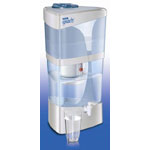
  4. Tata Swach: Water filter at Rs. 999.  Approx $20. Swach does not require running water, power, or boiling once installed. Each of its filters can produce 3,000 liters of purified water, enough to provide a family of five drinking water for a year.
  5. Samsung's washing machine with sari cycle
  6. Mini Truck Ace
  7. Aravind Eye Care System (AECS): AECS now treats around 300,000 cataract patients in a year.The cost of a typical cataract surgery in the U.S. is around $3,000. AECS has managed to bring down the cost between $30 and $300. Detailed comparison here.
  8. Jaipur Foot: " The Jaipur Limb is so efficient that after this limb is fitted, a person can walk like a normal person without a stick or support, and even run, ride a bicycle and climb a tree, Many of the patients can, after the fitment, go back to work in the field, factories, shops and offices."
  9. GE Vscan Portable Ultrasound Clam Shell Scanner
  10. Narayana Hrudayalaya Cardiac surgeries in the United States can cost up to US$50,000. In India, they typically cost around US$5,000-US$7,000. Depending on the complexities of the procedure and the length of the patient's stay at the hospital, the price tag increases. At Narayana Hrudayalaya, however, surgeries cost less than US$3,000, irrespective of the complexity of the procedure or the length of hospitalization.From India Knowledge@Wharton. 

Godrej ChotuKool
Godrej ChotuKool
Tata Swach
Tata Ace
    While this list of examples is by no means comprehensive, I intended to show that there are lots of activities happening in India to give extreme affordability with disruptive innovation. I would encourage readers to have a look at this article published in HBR by Jeffrey R. Immelt, Vijay Govindarajan, and Chris Trimble: How GE Is Disrupting Itself